IL Republican Party Has A New Chairperson

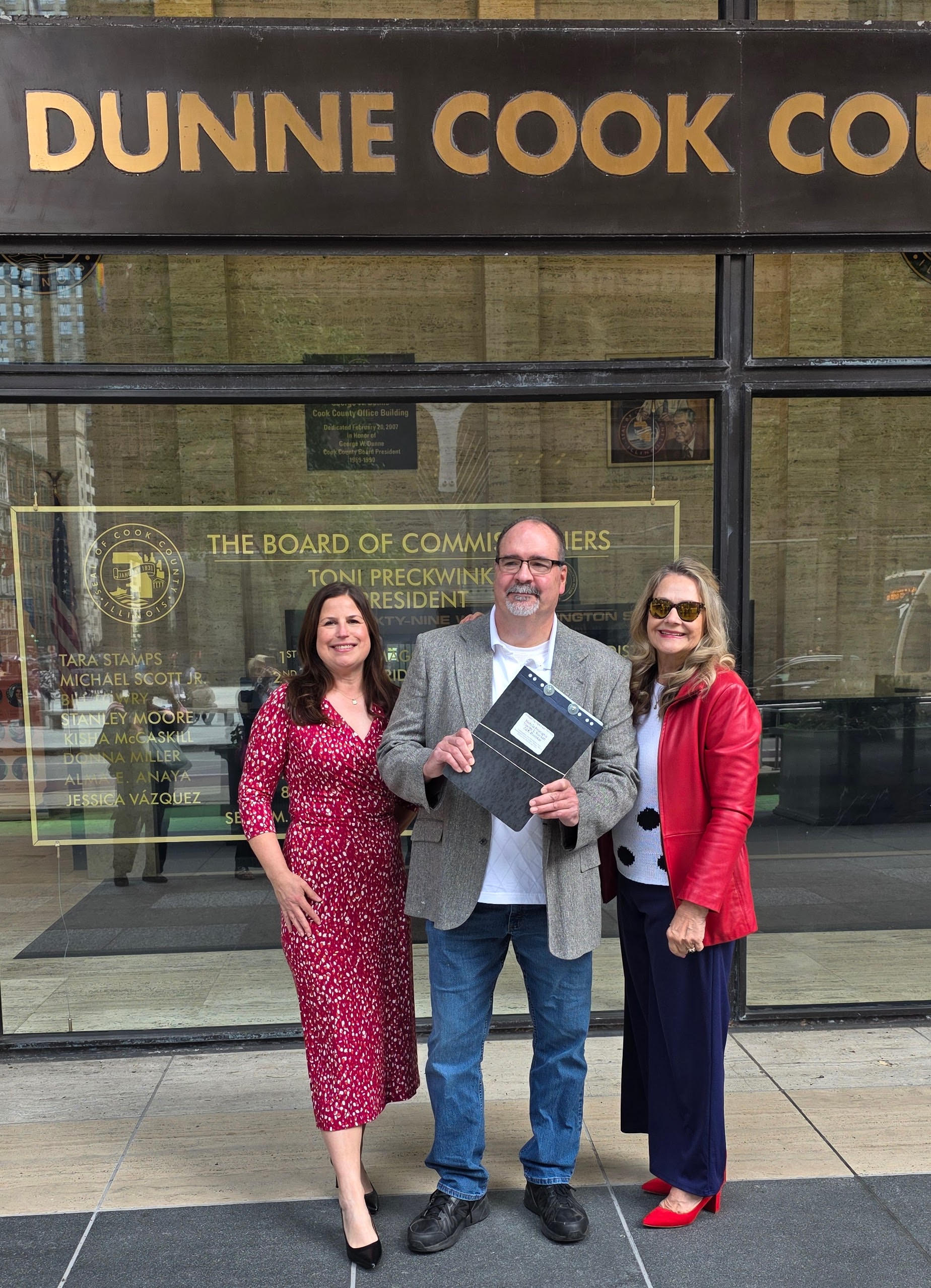
Bob Grogan Elected Chair of the Illinois Republican Party
Grogan released the following statement following the election:
“I am honored and humbled to be elected as the next Chair of the Illinois Republican Party. I’m grateful to my good friend, Chair Salvi, for her dedication to the party and her work to build a brighter future for Illinois families. Illinois Republicans are united and I’m excited to get to work electing Republicans up and down the ballot in November.”
Bob Grogan is a lifelong resident of DuPage County, where he served as DuPage County Auditor from 2008 to 2020. As Auditor, Grogan focused on transparency, radically transforming the office to make the County Checkbook publicly available, create a transparency portal and create a fraud hotline. His work rooted out waste, fraud and abuse, saving Illinois taxpayers millions of dollars, and the removal of county employees and criminal convictions by the State’s Attorney. Grogan lives in Downers Grove with his wife, Beth.
NOTE: Chair Grogan was not elected by acclimation as previously stated.
###
Birthright Citizenship in the United States
Are We Subjects or Citizens?
Birthright Citizenship & the Constitution

The following is an updated version of a speech published in Imprimis in July 2008.
This summer, Americans will celebrate the semiquincentennial of the Declaration of Independence—our nation’s 250th birthday. Also this summer, the U.S. Supreme Court will render a decision in the case of Trump v. Barbara, a class-action lawsuit challenging President Trump’s executive order ending the practice of birthright citizenship. The two are connected, because Trump v. Barbara involves issues fundamental to the meaning of the Declaration and the future of the American experiment in republican government. It is worth the time and effort of every citizen to understand its importance.
Birthright citizenship—the policy whereby the children of illegal aliens born within the geographical limits of the United States are entitled to American citizenship—is a great magnet for illegal immigration. Many believe that this policy is an explicit command of the Constitution, consistent with the British common law system. But this is simply not true.
The framers of the Constitution were, of course, well-versed in the British common law, having learned its essential principles from William Blackstone’s Commentaries on the Laws of England. As such, they knew that the very concept of citizenship was unknown in British common law. Blackstone speaks only of “birthright subjectship” or “birthright allegiance,” never using the terms citizen or citizenship. The idea of birthright subjectship, as Blackstone readily admits, is derived from feudal law. It is the relation of master and servant; all who are born within the protection of the king owe perpetual allegiance as a “debt of gratitude.” According to Blackstone, this debt is “intrinsic” and “cannot be forfeited, cancelled, or altered.” Birthright subjectship under the common law is thus the doctrine of “perpetual allegiance.”
America’s Founders rejected this doctrine. The Declaration of Independence, after all, solemnly proclaims that “the good People of these Colonies . . . are Absolved from all Allegiance to the British Crown, and that all political connection between them and the State of Great Britain, is and ought to be totally dissolved.” According to Blackstone, the common law regards such an act as “high treason.” So the common law—the feudal doctrine of perpetual allegiance—could not possibly serve as the ground of American (i.e., republican) citizenship. Indeed, the idea is too preposterous to entertain!
James Wilson, a signer of the Declaration of Independence and a member of the Constitutional Convention as well as a Supreme Court Justice, captured the essence of the matter when he remarked: “Under the Constitution of the United States there are citizens, but no subjects.” The transformation of subjects into citizens was the work of the Declaration and the Constitution. Both are premised on the idea that citizenship is based on the consent of the governed—not the accident of birth.
Continue reading this article in IMPRIMIS
Edward J. Erler is professor emeritus of political science at California State University, San Bernardino. He earned his B.A. from San Jose State University and his M.A. and Ph.D. in government from Claremont Graduate University. He has published numerous articles on constitutional topics in journals such as Interpretation, the Notre Dame Journal of Law, and the Harvard Journal of Law and Public Policy. He was a member of the California Advisory Commission on Civil Rights from 1988-2006 and served on the California Constitutional Revision Commission in 1996. He is the author of several books, including Prophetic Statesmanship: Harry Jaffa, Abraham Lincoln, and the Gettysburg Address and, most recently, a revised and expanded edition of The United States in Crisis: Citizenship, Immigration, and the Nation State.
Monthly Meeting
Join ROMT on Wednesday, May 13 from 6:30pm to 7:30pm
O'Connor Building at Prospect Park
733 N. Prospect Avenue in Park Ridge

Election Results
CONGRATULATIONS!
Bodo Jokić will continue is his previously-appointed
and now elected role as
Maine Township Republican Committeeperson.
Through Bodo's leadership, we’re building momentum and
growing Republican strength right here in Maine Township.
Today's Firestorm & the Declaration
Today’s Firestorm & the Declaration
Larry P. Arnn - President, Hillsdale College
The following is adapted from remarks delivered on November 18, 2025, at a Hillsdale College reception in Franklin, Tennessee.
Two momentous things come together as the New Year approaches. The first is the 250th anniversary of the greatest document in political history, the Declaration of Independence. The second is the national firestorm that rages over its meaning.
Trump
The first of the contrary winds fueling our national firestorm is Donald Trump, who has closed out his first whirlwind year. Crime is down in several cities where he sent the National Guard. The economy is doing pretty well, and predictions are that it will continue, decline, or quicken (I think it will fluctuate). The stock market is high, and the range of predictions is the same. Iran and Hamas are weaker, thanks in vital part to Israel, and the cauldron of the Middle East is a little cooler. 300,000 fewer people work for the federal government (after the number had increased by 240,000 during the Biden administration). Military recruitment and defense spending are up, and Secretary of War Hegseth gave a stirring speech to the military about its purpose, which is to fight. Secretary of State Rubio has given some wonderful speeches about the purpose and manner of American foreign policy, and he and others shuttled around the Middle East at speed to put together a fragile yet promising peace deal. Secretary of Education McMahon has cut the Department in half and is after the rest. Secretary of the Interior Burgum is looking for ways to use the land, and Secretary of Energy Wright is looking for energy. Attorney General Bondi seems to know no fear. Vice President Vance frightened the daylights out of Europe, calling for the elimination of wokeness and for increased defense spending.
A blizzard of executive orders has given regulatory relief, stemmed the tide of DEI, and reduced the size and reach of the federal establishment. Shower pressure is up: you can now take a hot shower under a heavy stream. Pressure is up on colleges, too, which have been violating civil rights law systematically. Tariffs are higher here and abroad, and that is still shaking out. The federal debt is rising a bit slower. The border is closed. The Ukraine War is a stubborn disaster; Trump is working on it and asking Western Europe to pay the bill.
The Resistance
The other wind blows from the self-described “resistance” to the elected government, and it is picking up. The “No Kings” demonstrations have turned out a lot of people—or fewer than a lot, depending on who you talk to. Mamdani is the first self-proclaimed socialist Mayor-Elect of New York. Virginia went bluer. Jews have been harassed on our college campuses with almost European intensity. An assassin killed Charlie Kirk, and reports are that several Trump administration officials and their families have been moved onto military bases due to threats to their safety. Violent attacks upon law enforcement officers proliferate.
Zany radicalism abounds both on the left and the right, left and right being promiscuous terms that mean even less today than usual. Young people on the left seem enamored of Marx; on the right, many gravitate towards Nietzsche. Nick Fuentes, who has a big audience, professes to like both Hitler and Stalin, who to be fair did cooperate to carve up their neighbors before they waged merciless war on each other. Churchill made sense of that by saying that national socialism and communism differ as the North Pole differs from the South. Many young people do not seem to realize that the North and South Poles are bad places to live. Their confusion stems from reasons that are deep but also limpid, visible to the bottom.
Continue reading this transcript at IMPRIMIS
Larry P. Arnn is the twelfth president of Hillsdale College. He received his B.A. from Arkansas State University and his M.A. and Ph.D. in government from the Claremont Graduate School. From 1977 to 1980, he also studied at the London School of Economics and at Worcester College, Oxford University, where he served as director of research for Martin Gilbert, the official biographer of Winston Churchill. From 1985 until his appointment as president of Hillsdale College in 2000, he was president of the Claremont Institute for the Study of Statesmanship and Political Philosophy. From October 2020 to January 2021, he served as co-chair of the President’s Advisory 1776 Commission. He is the author of several books, including The Founders’ Key: The Divine and Natural Connection Between the Declaration and the Constitution and Churchill’s Trial: Winston Churchill and the Salvation of Free Government.
"Bodo" Jokic Appointed as New ROMT Committeeman
Republican Party of Cook County
Aaron Del Mar - Chairman
FOR IMMEDIATE RELEASE - 8/16/25
Cook County Republican Chairman Aaron Del Mar
Appoints Slobodan “Bodo” Jokic as New
Maine Township Republican Committeeman

Palatine, IL — August 16 — Cook County Republican Chairman Aaron Del Mar today announced the appointment of Slobodan “BODO” Jokic as the new Republican Committeeman of Maine Township, succeeding longtime Committeeman Jim Stinson.
“Bodo Jokic is a proven community leader with a passion for strengthening our Republican Party and growing our grassroots presence in the northwest suburbs,” said Chairman Aaron Del Mar. “His dedication, energy, and vision will be a tremendous asset as we continue to build a stronger Republican organization in Cook County.”
Chairman Del Mar also expressed his deep gratitude to outgoing Committeeman Jim Stinson for his years of service and commitment to advancing Republican values in Maine Township.
“Jim Stinson has served with integrity and devotion to our party. On behalf of the Cook County Republican Party, I want to thank him for his leadership and all the work he has done to support Republican candidates and causes,” Del Mar added.
Jokic, widely known as “Bodo” in the community, is committed to uniting Republicans in Maine Township, engaging new voters, and ensuring strong Republican turnout in upcoming elections. His appointment marks a renewed effort to strengthen the GOP’s presence in one of Cook County’s most important townships.
###
Illinois House GOP warns Democrats' energy package could raise utility costs, impose new mandates
A 2023 report from the Illinois Commerce Commission found that utility rate cases—particularly those related to clean-energy transitions—have led to significant increases in delivery charges across several Illinois service territories. The report notes that pending decarbonization requirements may further elevate costs unless mitigated by legislative planning.

JB Pritzker, Governor for Illinois
The Illinois House GOP announced on X that a pending energy package backed by Governor J.B. Pritzker and Democratic lawmakers could significantly raise utility costs for families and businesses while imposing new green-energy mandates on local communities.
Illinois energy policy has become a focal point in recent legislative sessions, with lawmakers debating mandates related to renewable infrastructure and rate-setting authority. According to the Illinois Power Agency, state renewable standards require substantial investment from utilities and municipalities, contributing to local concern about future financial obligations. This regulatory backdrop provides context for the Illinois House GOP’s criticism of the proposed package.
The U.S. Energy Information Administration (EIA) shows that Illinois residential electricity prices have risen over the past several years, reflecting broader national trends tied to infrastructure upgrades and renewable portfolio costs. EIA data indicate that Midwestern states experiencing aggressive clean-energy transitions often see above-average rate volatility. These figures help illustrate why consumer advocates and legislators continue to scrutinize large-scale energy legislation.
A 2023 report from the Illinois Commerce Commission found that utility rate cases—particularly those related to clean-energy transitions—have led to significant increases in delivery charges across several Illinois service territories. The report notes that pending decarbonization requirements may further elevate costs unless mitigated by legislative planning. These documented cost pressures align with the concerns highlighted in the Illinois House GOP’s message.
The Illinois House GOP identifies itself as the Republican caucus of the Illinois House of Representatives, advocating for policies focused on fiscal responsibility, public safety, and government accountability. The caucus engages in legislative negotiations, public communication, and constituent services across the state. Its platform emphasizes reducing taxes, limiting government mandates, and promoting affordability for Illinois residents.
IMPRIMIS: Lawlessness is a Choice
2020 George Floyd protests turned violent and lawless after dark in Minneapolis
The following is adapted from a speech delivered on September 30, 2025, at Hillsdale College’s Blake Center for Faith and Freedom in Somers, Connecticut.
While being interviewed on a recent podcast, Texas Democrat Congresswoman Jasmine Crockett decided to opine on crime, a topic on which she apparently considers herself to be an expert. Her nutty conclusion was this: “Just because someone has committed a crime, it doesn’t make them a criminal.”
I can see how this logic would have a wide range of uses for politicians: “Just because someone told a lie, it doesn’t make them a liar”; “Just because someone took a bribe, it doesn’t make them corrupt.” It’s a bit like the thought experiment: “If a tree falls in a forest and no one is around to hear it, does it make a sound?” If a crime is committed and no one is responsible, was there actually a crime at all?
Of course, it’s nonsense. A criminal is defined precisely as a person who has committed a crime. But when Crockett chooses her own definitions, she is simply echoing a progressive shibboleth that has turned blue cities across the country into lawless hellholes. It holds that people who commit crimes have no agency—that they are helpless victims of circumstance. Therefore, any attempt to hold them accountable by arresting them or putting them in jail is unjust—it further victimizes them.
The obvious result of this logic is that criminals are emboldened and their real victims become helpless hostages to lawlessness.
It is a short step from Crockett’s logic to the justification of defunding the police as a way to “make communities safer.” That communities become safer by having fewer police is, of course, a lie, but defunding police is what progressives have been doing since the anti-cop, BLM-Antifa riots of the “Summer of Love” in 2020.
As a former police reporter, I’ve seen how soft-on-crime policies hurt the very people progressives pretend to care about. It’s precisely the most vulnerable in our big cities who need the most policing and have the least resources to protect themselves from mayhem.
Religious Liberty & the genius of our Founding Fathers
We are in danger of losing the precious gift of religious liberty, which took almost 2,000 years for the Christian West to put into practice.
Glenn Ellmers - IMPRIMIS - December, 2024
The following is adapted from a talk delivered at Hillsdale College on September 29, 2024, during a conference on “Christianity in America.”
One of the most beautiful things written during the American Founding period is George Washington’s 1790 Letter to the Hebrew Congregation in Newport, Rhode Island. Washington had visited Newport in August of that year, and shortly after his visit, one of the leaders of the Jewish community sent Washington a letter thanking him and congratulating him on his conduct as president.
Washington responded, in part:
The Citizens of the United States of America have a right to applaud themselves for having given to mankind examples of an enlarged and liberal policy: a policy worthy of imitation. All possess alike liberty of conscience and immunities of citizenship. It is now no more that toleration is spoken of, as if it was by the indulgence of one class of people, that another enjoyed the exercise of their inherent natural rights. For happily the Government of the United States, which gives to bigotry no sanction, to persecution no assistance, requires only that they who live under its protection, should demean themselves as good citizens, in giving it on all occasions their effectual support. . . . May the Children of the Stock of Abraham, who dwell in this land, continue to merit and enjoy the good will of the other Inhabitants; while every one shall sit in safety under his own vine and fig tree, and there shall be none to make him afraid. May the father of all mercies scatter light and not darkness in our paths, and make us all in our several vocations useful here, and in his own due time and way everlastingly happy.
Washington here magnificently summarizes the principle of religious liberty, a principle at the heart of the American Founding and one of the greatest accomplishments in human history. Today, this principle has been under assault—think of the vicious antisemitism we have seen on many college campuses recently or the persecution of Christians by our federal government. The faith of American Christians and Jews has been mocked and increasingly threatened by an aggressively secular, even atheistic, ruling class.
We are in danger of losing the precious gift of religious liberty, which took almost 2,000 years for the Christian West to put into practice.
Glenn Ellmers is the Salvatori Research Fellow in the American Founding at the Claremont Institute. He received a B.A. from Boston University and an M.A. and Ph.D. from the Claremont Graduate University. He has served as a visiting research fellow at Hillsdale College and as a speechwriter for two cabinet secretaries. He has written for numerous publications, including the Claremont Review of Books, The New Criterion, Perspectives on Political Science, Law & Liberty, and The American Mind. He is the author of The Soul of Politics: Harry V. Jaffa and the Fight for America and The Narrow Passage: Plato, Foucault, and the Possibility of Political Philosophy, and he is co-editor, with Michael Anton, of Leisure with Dignity: Essays in Celebration of Charles R. Kesler.